Kim
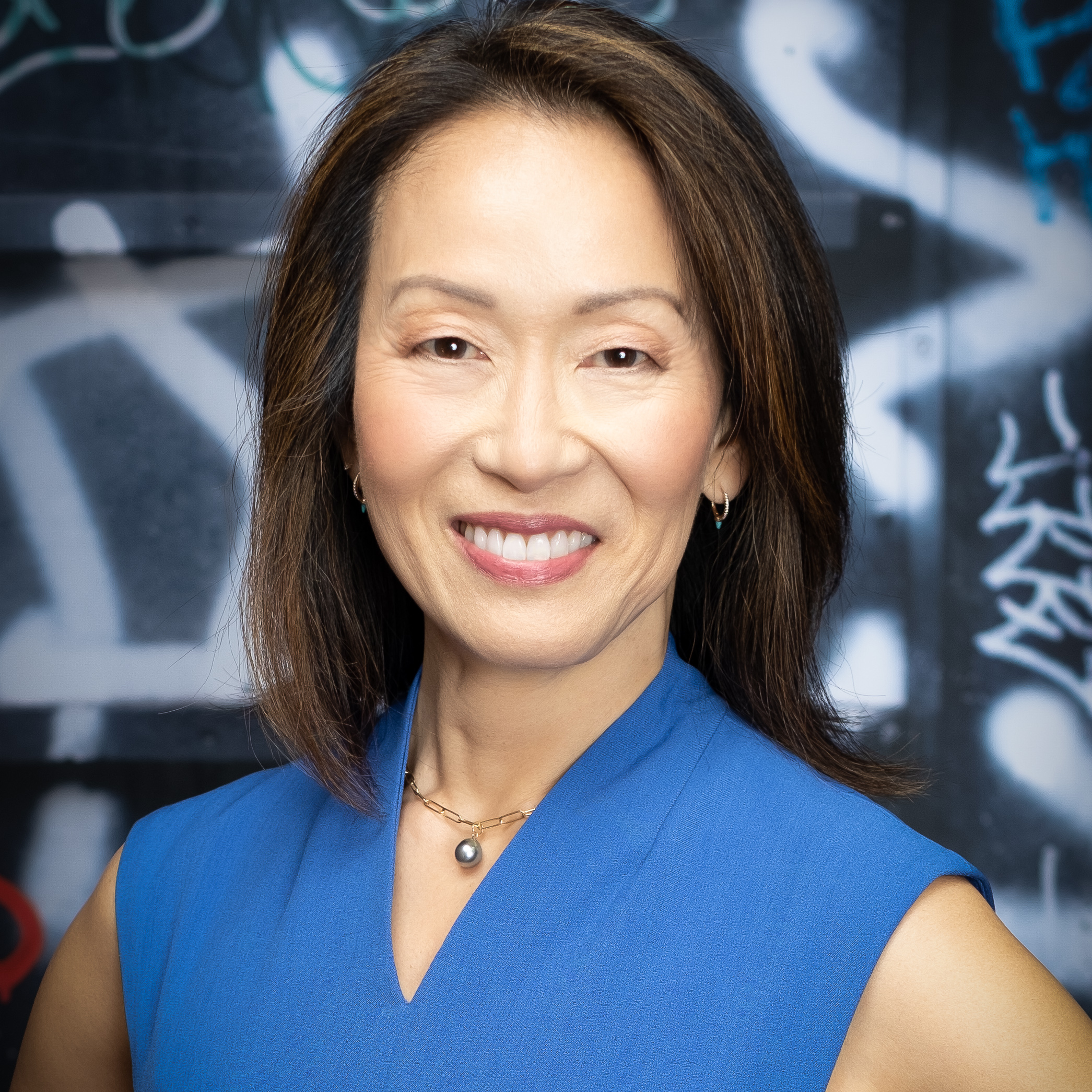
Hello everyone. I’m Kim Thibodeaux, and welcome to NEBGH Voices. I’m so glad you’re joining us for this important conversation. In recognition of National Infertility Awareness Week. Today, I’m honored to welcome Dr. Janet Choi, Chief Medical Officer at Progyny. Dr. Choi leads Progyny’s Clinical Strategy ensuring the highest quality care across the family building and women’s health continuum, and brings more than three decades of clinical leadership and hands-on patient care experience. A nationally recognized expert in fertility preservation and reproductive aging and consistently named a Castle Connolly top doctor. Dr Choi has been at the forefront of advancing access, improving outcomes and raising the standard in reproductive health care. Dr Choi, we’re so grateful. Welcome to the show.
Dr. Janet Choi
Thanks so much, and really delighted to be here, Kim.
Kim
Great. We’re going to jump right in and just try to set the stage a little bit for our listeners today. So to start us off, Dr Choi, can, can you share a snapshot of where fertility and the IVF landscape was 10 years ago, a decade ago, when Progyny launched, and what feels most different to you today?
Dr. Janet Choi
Yeah. So back in 2014, 2016 you know, infertility was, again, I live and breathe it as a reproductive chronologist taking care of patients. But I think it was much more shadowed in hushed, you know, hushed conversations, although it’s still oftentimes, people will still be embarrassed to think about, talk about it. I think there are more public conversations now about this. There’s less shame, and more people actively seeking education and advice about it from a coverage perspective. And unfortunately, if you’re suffering from infertility or reproductive loss and you need science and technology on your side to help you have a baby, it can become very costly very quickly. And a decade ago, there was minimal to no coverage in many cases. And if there was coverage by carriers, it was really kind of fragmented. And so more often than not, I’d have patients having to come out of pocket to pay, sometimes having to take on a second or third job, catch up or retirement funds. So that was kind of the state of infertility benefits, whatever there was available about a decade ago. And I’m happy to report that at least in some areas and for some populations, it’s gotten better and evolved.
Kim
Well, that’s great to hear. Certainly, that progress we are seeing a growing share of Americans say they’ve either undergone fertility treatment or certainly, we all know somebody who has. From your perspective, what’s driving this, you know, increased number of people who are seeking fertility treatment. Is it generally just higher utilization? Are we looking at delayed parenthood, access to care, stigma? What? Tell us a little more about the environment?
Dr. Janet Choi
It’s a great question. I think it’s a combination of a multitude of factors, definitely. So the World Health Organization released a report several years ago saying that the prevalence of infertility has been rising. So one in six adult individuals worldwide is impacted by infertility. And infertility, for those of you who want a definition to hang your hat on, it’s basically the inability to conceive for a heterosexual couple trying for six to 12 months, depending on the age of the female partner. And the American Society for Reproductive Medicine actually expanded that infertility definition a few years ago to encompass those individuals, single parents, by choice, same sex couples, who might need fertility services to add to their family. And now, when you look at the US population, about one in five reproductive age women is affected by infertility as well as we don’t want to discount the fact that when you look at infertile couples who are seeking care, about 40% of the time there’s at least some part of it is attributed to male factor issues, so sperm related male partner health related issues contributing to that couple struggles, and I think it’s a combination of factors. So you know, you may or may not know, the audience, may or may not know. You know, females are born with a set number of eggs. We don’t manufacture eggs, unlike males, who basically their testes start to turn on in puberty and make sperm day in, day out, into their 60s, 70s, 80s. And so women do have this true biologic clock in that the egg supply is waning constantly in quantity and the quality of the eggs that have been sitting their bodies because they were pre manufactured before birth, declines the longer they sit in the body. So, you know, with that increasing age in the US of first birth for women, so it’s been steadily increasing, I think, averages around 27 plus years a year or two ago. A few years back, it was 26 years and a decade ago. So as more and more women delay having children for professional reasons, for financial reasons, for access to the right benefit reasons, that can translate into more need. Because again. And the ability to conceive with one’s own eggs does decline with normal aging. Now this is not to cause fear mongering. I always like to tell people this just if you’re 40. Getting started doesn’t mean that you’re doomed to having infertility, needing fertility services, but the probability is going to be increased versus if you start trying when you’re 25
Kim
So, so the average age of first birth has continued to rise in the US?
Dr. Janet Choi
It has and when I actually, I’m gonna, you know,
Kim
Yeah, tell me.
Dr. Janet Choi
Check it out. When you look at 2014 data, the average age of first birth in US was around 26.3 years of age in 2023 when I could find the last reported statistics, it was 27.5 when you look at urban centers like New York City, that average age is actually even higher. I think it’s up to like, again, don’t quote me on this, like 3132 years of age. So again, especially as you move Pat into your middle 30s and late 30s, when you look at healthy individuals, just to give you some biologic percentages to hang your hat on for someone in there at age 30, infertility at age 30, prevalence rate is around 20 to 25% of women. For women age 40, the rate of infertility jumps to about 55 to 65% again, it’s through no fault of theirs, right? It’s not anything you do. I want to make that clear. This is the normal biology and reproductive aging at play.
Kim
And, of course, we are talking about averages here, correct?
Dr. Janet Choi
Absolutely, yes, yeah.
Kim
So there’s so some folks are going to vary. For sure. We were also hearing more about fertility preservation, things like egg freezing. What trends are you seeing there? And well, tell us what egg freezing is, and then what trends are you seeing there, and why is demand for that increasing, right?
Dr. Janet Choi
So again, when people hear egg freezing, some people will sort of say, oh, it’s like, you take an ice cube tray and put my eggs in each I’m like, no freezer burn, and there’s an expiration date. In fact, the technology has advanced so much that we have people now thawing as eggs that they froze over a decade ago. Those eggs and turn into healthy pregnancies and babies. So it’s very heartening. So egg freezing is a fertility preservation treatment whereby women can go through the hormone injection process that we normally associate with in vitro fertilization. So after seeing a fertility specialist, they do nine to 10, 11 days worth of daily injections to stimulate and wake up a cohort of the eggs they already have hibernating in their ovaries, and then those eggs are surgically extracted from the ovaries. And not all the eggs are typically usable, but the ones that are found to be mature, and sometimes some of the almost mature eggs, are then taken by the embryology team and vitrified. So it’s a freezing technology where they’re instantly frozen, stored in freezer tanks on straws, and then they can remain there until that person decides to use them or they may not. And so it’s very important to understand this is a great way to take advantage of youthful age, right? Someone who might be in her 20s or young 30s, who might have on offer the opportunity to freeze your eggs, whether through an employer benefit or they happen to have the money to spend on egg freezing to do this, but it’s not 100% guarantee of a future baby waiting for you in that freezer. Take from that egg, because not all of them turn into a healthy pregnancy, but it’s a great way to give you another option. Should you end up facing infertility at a later age.
Kim
Interesting, interesting, so helpful. Thank you. Dr. Choi, we are seeing recent reports that show more companies organizations are expanding fertility and adoption benefits as part of their total reward strategy. So for our employers who are listening today, why has fertility and family building support moved from really a niche offering like you were talking about almost a decade ago, which is not that long ago, to really a mainstream kind of workforce imperative today?
Dr. Janet Choi
Yeah, so it’s interesting. You know, as an OB/GYN and reproductive endocrinologist, to me it makes sense. This is not a sort of a nice-to-have add-on or an elective procedure. I think it’s really vitally important to many individuals who have family building as part of their future roadmap or current desires. And I think increasingly employers, because they’ve been getting feedback from employees, both from an attraction of talent perspective, I think close to 50% of employees now say that fertility benefits are part of the important equation or formula when they consider what job to take, I think increasingly employers are recognizing the importance of providing fertility benefits to their population, for retention, for recruitment, as well as for employee well being and loyalty. I certainly heard in the doctor’s office setting from numerous patients that came through the door. Boy, am I glad that my employer started offering fertility benefits, because otherwise I would not have been able to afford going through fertility treatments, or I really wanted to freeze my eggs. It wasn’t an option. But now I can through my employer, and I’ve decided to stay on with them because of this benefit. So I think, anyway, it’s also translated to when you look at the statistics. Back in 2014, when the Society for Assisted Reproductive Technology, which keeps tabs on the majority of assisted reproductive technology art cycles in the country, only about 1% of those cycles, about 200,000, were attributed to egg freezing. When you go to 2022, the last year that we have finalized data, that jumped to almost double, like 408,000 more than double ART cycles, and of those ART cycles, about seven to 9% were attributed to egg freezing cycles. So I think there is this growing understanding that fertility, fertility preservation, giving employees as many opportunities to build their families as possible, is vitally important to the workforce. And I’d say about 70% of our clients actually offer fertility preservation because of that recognized need.
Kim
And, and has the technology improved as well?
Dr. Janet Choi
Definitely. Again, the you know, egg freezing has been in the works from a research study perspective, and animal models and animal models and human models for like decades, I think the first animal egg frozen a rabbit or a mouse back in the 50s, was done, but it took many, many years to really kind of hone in on how to best preserve an egg, because it’s much bigger than sperm. You’ve been successfully freezing sperm for ages, and because the eggs are larger cells in the sperm with lots of water, it was very tricky to figure out how to freeze the eggs. You wouldn’t get ice crystals that might damage the egg at thaw. But the method that the vast majority of labs that I’m aware of in the US that are used to apply to freeze eggs is called vitrification, where the eggs are literally flash frozen, and that seems remote effective preservation of those eggs so that they come out of the freezer in a usable state. Wow.
Kim
So interesting. Really, so interesting. I just want to shift a little bit to the policy side of things. And I know you’re not a policy expert, Dr. Choi, but I know you do. You do follow these issues, I know with great interest, you and the team at Progyny, but I mean, over the past year in particular, it seems that fertility coverage has entered the national policy conversation in new ways, alongside, you know, we’re seeing some some state level mandates. So how would you describe the current policy landscape, and what should employers be watching on that front?
Dr. Janet Choi
So first, a historical backdrop, again, when looking back over a decade ago, 2014, there were about maybe 15-ish states in the US that offered some sort of fertility mandated coverage. It wasn’t necessarily comprehensive, and we could talk about how important that is to sort of understand what true coverage means. And then when I looked at some recent stats, I think Resolve is one of the nonprofit organizations. I think it’s up to 22 states now offer some sort of mandated fertility coverage, including DC. And I think you know, definitely, those of us who operated in the fertility family building arena were very well aware of the recent executive order that came out tasking the government work for the government panel to look at ways to ensure that every single person in the country had access to IVF services, you know, as indicated. And so I think that’s a great sea change and an increase in awareness. And, don’t want to say but, and I think it’s it behooves employers to really understand what the standard state mandate really means. This is where our legal team really dig deep work in partnership with our clients and our prospects, to really understand how the state by state variances impact benefit design, as well as understanding the what the mandates might miss when looking at truly comprehensive fertility and family building coverage, because some of the mandates might say fertility coverage for heterosexual couples, or, you know, fertility coverage for people up to a certain age, and then you’re excluding a significant part of the population that badly needs fertility services. Again, single parents, by choice, same sex couples, whether it’s same sex female couples or same sex male couples, yes or older individuals, relatively older speaking, like 45 48, 50, who may want to very badly add to their family, and the only way they can do so is through donor egg. So I think it’s it’s great that there is an increase in the number of states with mandated coverage. I think it’s important for employers to understand and be very thoughtful before they just plunk a benefit in place to say, not only are we going to meet the state-mandating needs, but we’re also going to make sure that every single one of our employees is adequately covered.
Kim
That’s a great point, because, as you know, at NEBGH, many of our employers have employees all over the country, exactly right so and even all over the world. We haven’t even gotten to the global conversation. But, and so, so for them to understand, sort of state by state, what that coverage looks like, I think you’re also saying a mandate doesn’t mean that it’s 100% of everything you’re going to want and need. So understanding A, the state level mandates. Understanding B, where are there gaps, and where are there. Not mandates. And then, how do you really custom-design a benefit that takes into account all those factors? If I’m hearing you correctly.
Dr. Janet Choi
Absolutely so, for instance, a mandate might and this is a shout-out to a nonprofit organization. The project works with closely a lot, and that I’m on their advisory board, the Chick Mission. They’ve been very small, but very powerful and vocal nonprofit organization supporting women diagnosed with cancer and certain chronic diseases, where the treatments actually might save their lives, which is great, but you know, gravely impair their future fertility. And so they’ve been instrumental in trying to make sure that states put into place fertility preservation coverage mandates, which is great, but again, not the whole picture, right? So it’s great to have access egg freezing and coverage coverage, but what about the person who needs support when they want to adopt, right, or when they need access to educational carriers?
Kim
So yes, interesting, interesting. I want to pull the lens back a little bit because fertility care can often become an entry point into broader women’s health issues and women’s health needs. And I know you guys cover a wide range of women’s health, we’re focused on Infertility Awareness Week, and focusing on that. But can you talk a little bit about how infertility intersects with overall health and why comprehensive, continuous care matters? For example, what are the other things we might be learning about about infertility related to other women’s health conditions that can also be addressed through benefits?
Dr. Janet Choi
So I think, as you and I know and as as anyone who works with a woman who identifies as female knows, typically, we don’t present with one isolated medical condition. It’s oftentimes a woven tapestry of a multitude of different medical issues, and they and the ways they need to be addressed may wax and wane over time with age, but oftentimes, infertility might be the first time a person decides to actually go see a doctor. I know that when I was in my 20s and 30s, I don’t think I even had a primary care doctor, or if I could, I would remember to get a pap smear done every three years, right? So it’s a great opportunity to connect with a physician and not only manage the infertility at hand, but as an example, someone with polycystic ovarian syndrome, very erratic periods due to hormonal issues, might also come in with mental health needs, depression, anxiety. Prevalence is higher in that population affected with polycystic ovarian syndrome, they have a higher risk for obesity under and being overweight, which affects cardiovascular health, both present and future state, may also have an increase for with pregnancy risk factors. So like, what can we do with all that information to help you know, in a very holistic sense, really help best address that person’s health and also mitigate future risk. The other call it, I want to make, is it’s not just about an entry portal for women’s health, it’s for men’s health. Again, back to the statistic of at least 40% of couples have a male factor issue. Oftentimes, it’s semen analysis that’s done to evaluate the male side of the fertility picture can be a window, window into their overall health. So I’ve heard feedback from our reproductive urologist in our network over and over again, that oftentimes it’s the first time that a man realizes, hey, I actually might have diabetes or thyroid disease or some other issue that affects my overall health, not just my sperm count.
Kim
So that so that is interesting, and I appreciate you reinforcing some of the male issues that are that are being confronted as well. I think one of the things that people find very challenging is that healthcare is very fragmented, and so you’re talking about, we’re talking about a primary care doctor, we’re talking about an OB/GYN, potentially an endocrinologist, you know, other you know now we have GLP-1s. We’re talking about obesity experts, right? So, so what in your mind, sort of, what is good coordinated care look like, and how can a woman sort of advocate for herself to get better integrated care?
Dr. Janet Choi
So I think for those individuals who are getting benefits through Progyny, you’re basically, you’re at the right point. Because I think one of the this, like the secret sauce to our programming, is the PC, the Progyny Care Advocate that every single member who gets her benefit is assigned to. We match there all of our all of them are employees of ours. They have clinical backgrounds in women’s health and nursing as mental health experts, as LCSWs. We have some dietitians and doulas on our team as well, and so each member is matched up with their own PCA to help educate navigate, not just how to get coverage and understand the administration of their benefit, but understand and piece together some of these disparate markers in their health history to get them to the appropriate care and get in a very efficient manner, so and efficient from a clinical perspective as well as from a financial perspective. So, case in point, someone who, in midlife, might share with their PCA, “I did see my gynecologist about 18 months ago. I shared some of these symptoms, but they kind of said, you know, yeah, it’s menopause. But try to, like, grit your teeth, you’ll you’ll get through the other side in a few years”, and that’s it. And then they might list a litany of symptoms ranging from, you know, vaginal dryness, no urine leakage and hot flushes and increased inability to cope because they are fatigued and also feeling more anxious, and having their PCA, their nurse educator, sort of put those symptoms together and say, “Hey, you’re not it’s not all in your head. This actually paints a picture that is oftentimes associated with women going through menopause. Let’s get you connected with a provider who actually can help you address and treat these symptoms so you can have a much better and healthier quality of life.” So really having that person to greet you, support you, and build a team around you that really matches your personal needs in an efficient and effective manner is is incredibly important.
Kim
And part, does part of that also include sort of navigation and access in your community.
Dr. Janet Choi
Absolutely. So you know, we have local resources available, particularly when I think about our members who are going through a pregnancy and postpartum program. There are regular, regular assessments that are shared with the members from a mental health perspective, from a social determinants of health perspective, because of the great need we acquired a year or two ago leave and benefit navigation program to fold into our pregnancy postpartum program, because we were so well aware of the stressors that poorly navigated, poorly understood leave and benefit means during family leave can translate to so all of that is there to try to really best support the member.
Kim
Yeah, that’s terrific. That’s terrific because it can just feel so challenging, and you feel like oftentimes the burden is on you to try to stitch it all together, to get able to talk to each other. It can be so frustrating.
Dr. Janet Choi
And if you’re already having difficulty coping right, and then juggling and feeling well.
Kim
Right.
Dr. Janet Choi
This is just, it’s it can be an undue burden.
Kim
All of those things, and I really do appreciate you also addressing and sort of acknowledging some of the mental health challenges as well that that women face for a whole host of factors, whether it’s, you know, a chronic mental health condition, or whether it’s something related to their illness or hormone, or whether it’s situational depression, You know, these are real issues that women are facing, in addition to the physiological issues.
Dr. Janet Choi
Exactly.
Kim
Yeah, so I appreciate you addressing that as well. We’re moving to the end of our conversation. Although I could talk to you all day already.
Dr. Janet Choi
I feel like it’s just flown by.
Kim
Yeah, I know, I know, and I have about 27 more questions. But, but we’re excited for you and congratulate you on your 10th anniversary, and excited that you’re a very active member of NEBGH, but I’d just love to hear some reflections over the past 10 years. What impact are you? Are you most proud of? Is it patient outcomes? Is it your employers partnerships? Is it your impact on sort of cultural shift, or bringing some of these things out of the shadows and into, you know, mainstream conversation. I’d love for you to just take a moment to reflect.
Dr. Janet Choi
So again, I agree. I could talk to you all day, Kim. So thank you for the opportunity. I think you know, looking at what Progyny has accomplished in its 10 years, I think the impact it’s had on hundreds of 1000s of member journeys as they were seeking support through fertility, family building, and now also, more broadly, in other areas of women’s health, it is really the impact on the best possible clinical outcomes in an area of medical care that can be very tangled, can be very costly, can be very confusing. So one of the things I’m particularly proud of, again, I wish I could take responsibility, but it’s it was put in place by the team even before I got there, is the really high effective treatment rates for those going through fertility family building treatments associated with also decreased pregnancy complications from a multiple gestation perspective, we’re, you know, the stat, I think what’s the average? You know, twin rate, about a decade ago, through fertility treatments, was as high as 20 to 30% at the national level; it’s down to maybe about four to 7%, and Progyny has been consistently around two or a little under 2%, which translates to more single full-term pregnancies. And for those who actually have difficulty connecting the dots, that translates to reduced maternity cost, the more singleton full-term babies you can get. That helps kind of impact reduction in preterm delivery and NICU admission rates as well. But I also think it’s, it’s looking at the evolution of offering, really, making Benefit Administration very human, humanizing and empathetic, which I don’t think I really my patients definitely didn’t see it. I didn’t see it much before Progyny came on the scene. How to really support a member, not just from a financial and healthcare perspective, but from an emotional perspective as well. I think it’s really eye opening it and something that very proud that Progyny has accomplished and continues to do.
Kim
So it is a very emotional issue. And I was talking to one of our HR leaders the other day, and we were happened to be talking about women’s health, and she said that one of her employees came up to her and said, It’s because of you that I have a family. Yeah. Like, really, really. I mean, can you imagine the being on the receiving end, you know, of a comment like that? I mean, it is very emotional, and I just imagine that it really builds loyalty for our employers to have these benefits.
Dr. Janet Choi
Absolutely, like, I’ve had patients say I want to name my baby after my Progyny PCA, because they’re the ones who really, kind of, like, held my hand at 8pm at night after hours and stuff like that.
Kim
So yeah, so that’s, that’s really, really, I think important. Let’s just take a minute to look at the future. Dr. Choi, looking ahead, where do you see fertility and family-building benefits evolving over the next five to 10 years?
Dr. Janet Choi
I think from a specifically from a fertility family building perspective, I would love to see truly uniform, across-the-board access to really great quality fertility and family building benefits and support for anyone who needs it. And I think we’re making inroads in that there’s still a lot of room to grow and progress to make, but that’s my hope. Would love to be able to cure infertility, but I don’t think that’s going to happen anytime soon, but understanding and getting the word out, offering services like fertility preservation to try to minimize the risk that someone is going to face, frank, future infertility. And I also think, I guess every conversation nowadays kind of, kind of goes back to AI. How do we appropriately integrate AI to really optimize the member experience, the provider experience, the client experience as well, without losing sight of the human oversight, the human touch, and I think that’s that’s a big question, and also work underway.
Kim
So, blending artificial intelligence with emotional intelligence.
Dr. Janet Choi
Although the emotional intelligence it’s really interesting. I was talking to a colleague of mine who’s been doing some research, and he said there are some studies that have shown that some good AI models were were ranked as more empathetic than human physicians or care providers. So I think it’s, it’s not even just that. It’s, it’s kind of making sure that you have expert human oversight over the really fantastic AI tools that we have on hand.
Kim
Yeah, that’s a great point. That’s a great point. Well, Dr. Choi, I want to thank you so much for sharing your insights and for the work that you’re doing to advance access to high-quality fertility and women’s health care. I also want to recognize and thank the team at Progyny for sponsoring the episode today in support of National Infertility Awareness Month. Partnerships like this really allow us to bring timely, relevant conversations to our HR benefits and total rewards community. So we’re very grateful this has been NEBGH voices. Thank you for listening. And as always, we wish you wellness.
voices
And I am one of the voices, one of the voices.
Dr. Janet Choi
I’m Dr Janet Choi, and I’m one of the voices of NEBGH.