Advances in Lung Cancer: Progress, Promise, and Workplace Support
Not a member and interested in attending? Contact Us.
Lung cancer continues to pose significant challenges as a leading cause of cancer-related deaths globally. However, advances in screening, biomarker testing, and treatment offer promising developments in the fight against this disease.
Join us during Lung Cancer Awareness Month for an insightful webinar where we explore recent breakthroughs and discuss what employers can do to support their employees affected by lung cancer.
MSK Direct is an employer benefits solution that expands and accelerates access to the lifesaving discoveries and subspecialized expertise of Memorial Sloan Kettering Cancer Center (MSK). Solely focused on cancer, our comprehensive approach ensures equitable access and supports every phase of the cancer journey—screening, diagnosis, treatment, and beyond—improving outcomes and delivering measurable value.
Connect with MSK Direct to learn more: +1 (844) 557-5507 | mskdirectinfo@mskcc.org | msk.org/mskdirect
Featured Speaker
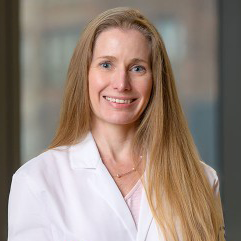
Jamie E. Chaft, MD
I am a board-certified medical oncologist who specializes in caring for patients with lung cancer.
I am part of a team of physicians from multiple disciplines — including thoracic surgery, radiation oncology, pathology, pulmonology, and interventional radiology — who meet weekly and collaborate to determine the optimal treatment plan for our patients. As part of our suite of treatment options, my colleagues and I run and participate in a multitude of clinical trials, all of which are available to patients who qualify and wish to participate. These trials range from therapeutic trials evaluating new treatment approaches to translational trials that help us learn more about lung cancer.
In the clinic, my team and I focus on personalizing our care for each patient not only to his or her type of cancer and its genetics but to the patient’s personal circumstances, beliefs, and wishes. We consider a patient’s disease characteristics and biological characteristics in light of the priorities of each patient and his or her family, and discuss treatment options — including clinical trial opportunities when appropriate — to provide the best care for our patients as we work with them to fight their cancer.
While I care for patients with all types and stages of lung cancer, my research focuses on the use of multimodality therapies (such as chemotherapy, immunotherapy, or targeted therapy plus radiation or surgery) to improve cure rates in patients with early-stage non-small cell lung cancer.
At Memorial Sloan Kettering, I am a lead investigator on all trials evaluating multimodality treatment for non-small cell lung cancers. These trials focus on developing new treatment regimens by finding different applications for standard drugs or testing new therapeutic agents with surgery and/or radiation. Additionally, I conduct research to identify biomarkers that are unique to a patient or his or her cancer. These biomarkers can be used to preferentially select a drug treatment regimen that is likely to be more effective against that individual’s lung cancer. Discovering such biomarkers will allow us to optimize the use of available therapies to maximize the benefit of anticancer treatments while minimizing the patient’s exposure to side effects of less-active treatments. This is a promising and active research niche in the area of personalized medicine where we aim to improve the outcomes and quality of life of patients diagnosed with lung cancer.
I'm a thoracic medical oncologist, which is a cancer doctor who specializes in thoracic (thor-A-sik) cancers. These are cancers that have to do with the chest, including lung, tracheal (windpipe), and thymic (thymus) cancers.
With

Dr. Mark Cunningham-Hill - Medical Director
Dr. Cunningham-Hill is an employee health expert known for his ability to create, identify and implement high-quality workplace health programs including prevention and screening, chronic illness interventions, and mental health and wellbeing initiatives. His broad occupational medicine and public health experience encompasses addressing chronic diseases impacting employers, employees and communities within the context of social, cultural and racial determinants of health.
Mark has served as the Medical Director for Northeast Business Group on Health since early 2018. Until 2017, he served as Senior Director, Global Solutions Center and Head of Occupational Medicine at Johnson & Johnson, Inc . At J&J, Mark led a team of experts covering occupational medicine, health and wellness, personal energy management, EAP and mental wellbeing, and work-life effectiveness, and supported regional operational groups delivering health services to 135,000 employees in 120 companies. Prior to seven years at J&J, Mark spent 17 years at GlaxoSmithKline in both London and Philadelphia, including as Head of Global Operations, Employee Health Management.
Mark received his MB ChB, Bachelor of Medicine and Bachelor of Surgery at Manchester University in the UK. He is a Fellow of both the American College of Occupational & Environmental Medicine, and the Faculty of Occupational Medicine, London.